Impact and exclusivity: How to grow mid-value income


Across the charity sector, a clear picture is emerging: fewer people are giving – but those who do are giving more. That means that what we might call your mid-value segment – exceptionally loyal and engaged donors, but giving under the threshold for major gifts – has never mattered more.
At Consider, we’ve spent two decades helping charities develop mid-value strategies that nurture loyalty, building reciprocity through stewardship. And it’s that same approach in our recent appeal for YMCA England & Wales that helped deliver £119.5k in donations against an £85.5k target.
Here’s how we did it – and what you could learn.
Knowing what mid-value donors want
If your charity is fortunate enough to have an existing mid-value segment in your database, then best practice (as with all fundraising!) is to start with insight – your understanding of how this audience came to your charity in the first place, what moves them and what they value above all else. It’s knowledge you’ve probably spent years curating, so use it!
Of course, every organisation’s supporters are unique – but over the years, we’ve seen some common trends. More so than standard-value donors, mid-value givers really want to understand the impact of their giving. They want to feel a sense of tangible, collective purpose and progress that they’re a part of – not just funding from afar.
It’s this relationship that gives them the confidence that their money is in safe hands – and will continue to be, again and again. And they respond well to exclusivity: the sense that they’re being included in something others aren’t.
Understand what your supporters are saying, then reflect that in your creative: you’ll make them feel heard. This is how you move from the transactional to the reciprocal, turning one-off gifts into a longer-term revenue stream that charities rely on.
What YMCA E&W needed
YMCA England & Wales came to us with a clear challenge: to grow income through their first mid-value programme, starting with a cash appeal targeted at their most loyal supporters.
And the ask itself was tangible: they had launched an ambitious new housing strategy, with a goal of creating 10,000 affordable homes for young people by 2030.
What we did
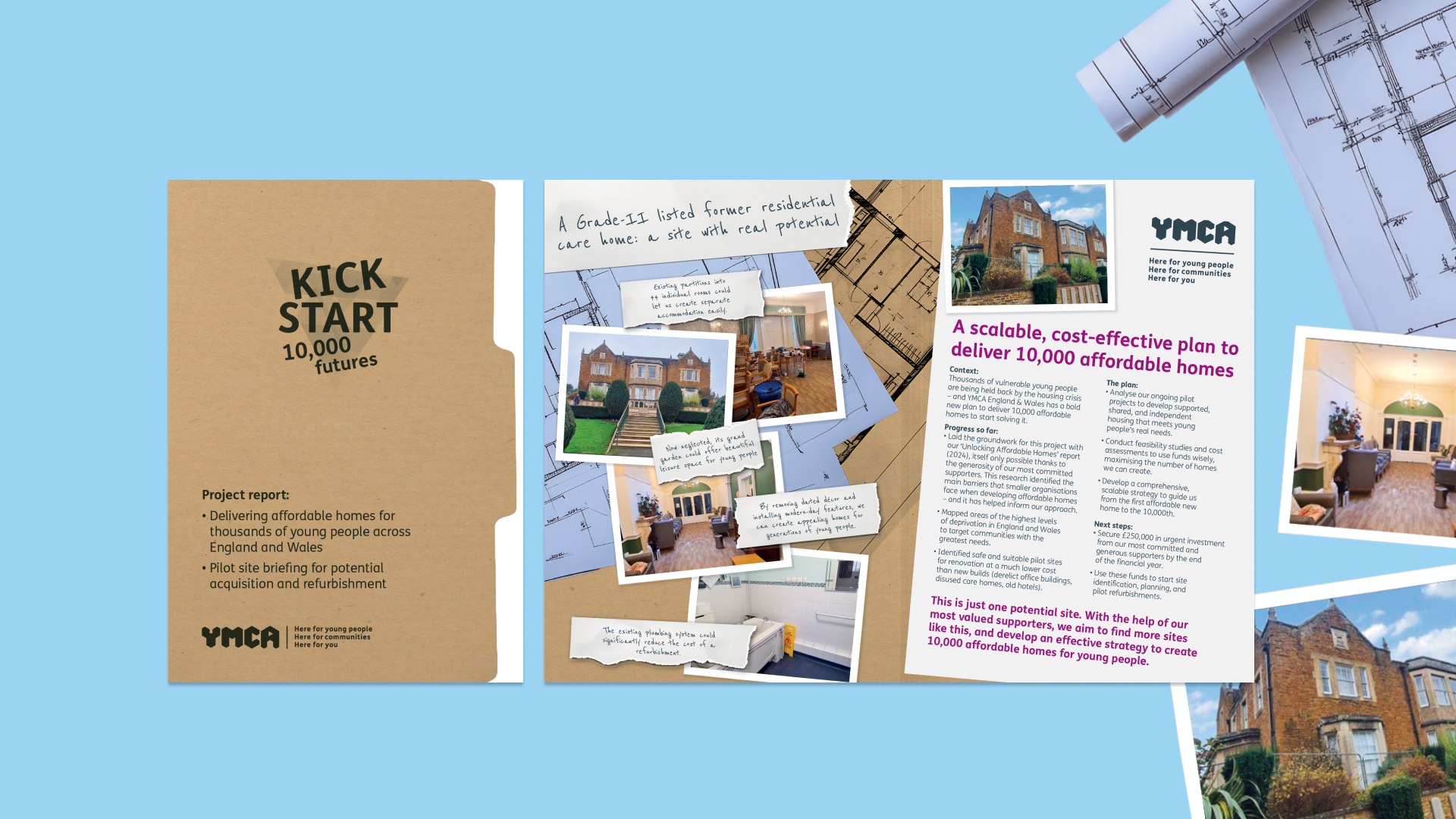
We positioned the appeal as a chance for the audience to become part of the solution as ‘kickstarters’. We led with exclusivity – letting supporters know that they were the first to hear about the housing strategy. And we framed ‘Kickstart 10,000 futures’ as an invitation – like an investment opportunity – giving them the chance to be part of something bold, scalable and historic.
Another key principle for us was making the ask connected to real impact. Rather than requesting a general contribution, we gave donors a clear sense of what their gifts would do. Received wisdom in fundraising says to shy away from technical detail, but here we did the opposite: going into the specifics of housebuilding and giving tangible detail on potential developments, showing people exactly what made them so promising.
We also included a leaflet with mock blueprints for a former care home that had been earmarked for conversion, which we hoped would give supporters something (literally) concrete to picture – and something to invest in.
Have a read of our full write-up here