


Using shock to break the scroll

In an era of endless scrolling and ‘skip ad’ reflexes, the most expensive mistake a brand can make is producing “wallpaper” – creative that is pleasant, professional and completely invisible. When indifference is the default setting for many audiences, brands and agencies often turn to shock advertising to tear through the noise.
It’s the creative equivalent of a cold bucket of water; it’s visceral, immediate and impossible to ignore. Charities have long been the pioneers of this medium. They often don’t have the luxury of a slow-burn brand build; they need viewers to care and act now.
The Power of the Physical Response
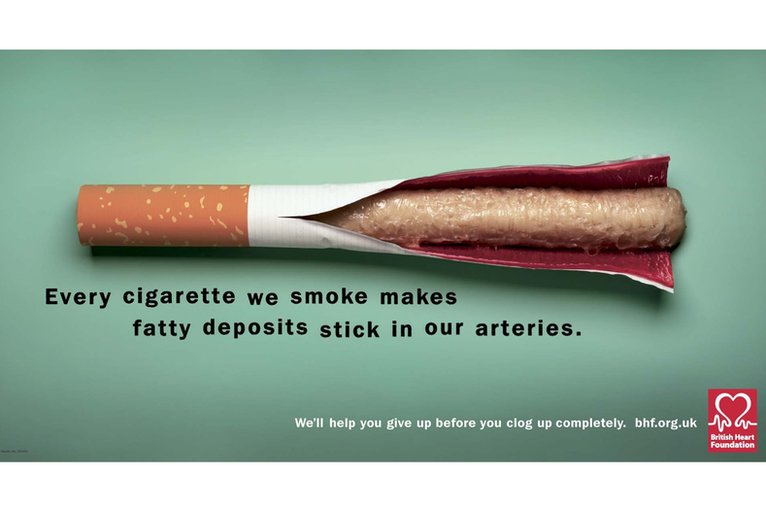
Traditional shock advertising works by triggering a physical reaction that bypasses the “rational” brain. A landmark example of this is the British Heart Foundation’s ‘Fatty Cigarette’ campaign. Rather than using desensitised imagery like blackened lungs, the creative featured a cigarette dripping with foul globs of lard. Showing a nauseatingly real metaphor for arterial damage.
The shock wasn’t gratuitous, it was a direct visual translation of health risks that forced viewers to confront a reality they usually ignore. The results proved that this “jolt” works: the campaign was credited with prompting an estimated 14,000 people to quit smoking.
At Consider, we believe the goal of shock advertising isn’t just to make someone gasp, it’s to make them think and act. Our proudest example of this is when we partnered with the Internet Watch Foundation. In 2023, IWF removed a record-breaking amount of child sexual abuse imagery (275,655 webpages), with almost every webpage (92%) including ‘self-generated’ material.
Our objective was clear: to educate young people, their parents/carers, and educators, about this threat, and empower them to take action and reduce the number of incidents. We also wanted to tackle the normalisation of this content amongst young people. Ultimately, our campaign needed to change young people’s behaviour when it comes to self-generated sexual imagery.
But, it’s incredibly easy to get a message like this not quite right. So, we got to know our audience by going into schools and working with young people to identify the right way to make them feel shocked and intrigued in co-creation groups. We learnt about exactly what connects with them, and what doesn’t. We knew that this audience is incredibly ad-savvy and has a filter for traditional PSA tactics. The insight also told us not to get too serious with this audience, mentioning things like criminality and any scare-tactics just causes them to switch off and scroll past.
However, the Overton window of what teens are used to seeing online has shifted hugely. They’re, unfortunately, very used to being exposed to a lot of extreme content online, which makes being actually able to shock them that bit harder. They’ve seen it all before – and worse. So we needed to work even harder to cut through.
So how did we use shock to cut through?
Disgust
We leveraged the language of fruit emojis, fully aware of their existing sexual connotations with the target audience. We didn’t need to explain the meaning behind the peach or aubergine emoji, they already knew and used them frequently. So, we used frankly disgusting versions of those emojis, like pubes drawn on a peach and cream on a banana. You can’t really believe a serious child-protection charity would do something like that BUT it’s because it was so gross, it was intriguing.
Outrageous Situations
We avoided dark, somber adverts, instead using upbeat music, bright visuals and relatable copy that hit home: “Imagine if everyone in Year 10 saw your **** pics, and then your Nan did too”. By keeping the tone awkward and slightly silly, we forced a digital double-take. It got young people to engage with a dark topic without triggering the defensive ‘skip reflex’ that follows content that feels like a lecture.
The Cringe Factor
This factor is part of what made the campaign so successful. We really leaned into the cringe which was hugely important for our audience as teens are so often fuelled by a need to fit in. By leaning into the cringe, not for being a victim, but the idea that it’s embarrassing to send unsolicited pictures or share pictures without someone’s consent. This allowed us to actually address the behaviour we wanted to change.
The Results
Our campaign stopped the scroll for over 5 million teens on YouTube alone, with 94% of viewers watching the advert to the end. In a time of skippable ad formats and with an audience who skips ads almost as quickly as they start them, this is a result we are truly proud of. We saw incredible results on other platforms too – including a 30% view through rate on Snapchat, compared to the industry benchmark of 20%.
Whilst views are a great measure of success, we really wanted to drive action and change the behaviour of teens. Our campaign shows it’s possible to shock people to follow up with an action. We didn’t advertise Report Remove (a confidential, free online service that allows children and young people to report intimate, nude, or sexual images and videos of themselves that have been shared online without their consent, and have them taken down) during this campaign but the number of reports made via Report Remove increased by 77%. This shows that our ads were sticking in young people’s minds so much so that when they needed support, they knew where to turn.
Final Thoughts
Shock advertising isn’t about being loud, it’s about standing out. Whether that’s by using traditional tactics of harrowing imagery from a charity, or a subverted ‘sexy’ emoji in a teen’s TikTok feed, the best campaigns use that initial jolt to open a door that stays open long after the viewer has moved on. But, you have to get it right. It’s got to speak the language of your target audience and the best way to do that is to include them in the campaign development, like we did for IWF.
If you’re looking for your next campaign’s engagement rates to defy industry standards, get in touch and let’s build a campaign that drives real, measurable action.


